

Pine plywood, the versatile option
Pine plywood is the perfect blend of nature and practicality. With its light surface and layered structure, it offers stability, lightness, and functional design, making it a highly valued material in minimalist decor and sustainable wooden furniture.
In desks, wardrobe fronts, or modular shelving, pine plywood offers superior resistance to warping compared to solid pine, while maintaining the beauty of natural wood. Its light aesthetic suits modern and Nordic styles, bringing freshness and serenity.
It's the perfect choice for sustainable interior design projects, as it makes better use of raw materials and combines design with environmental responsibility. Pine plywood achieves a balance between quality furniture, an affordable price, and a Nordic aesthetic that meets today's most sought-after criteria: essential beauty and practicality.
Aesthetics
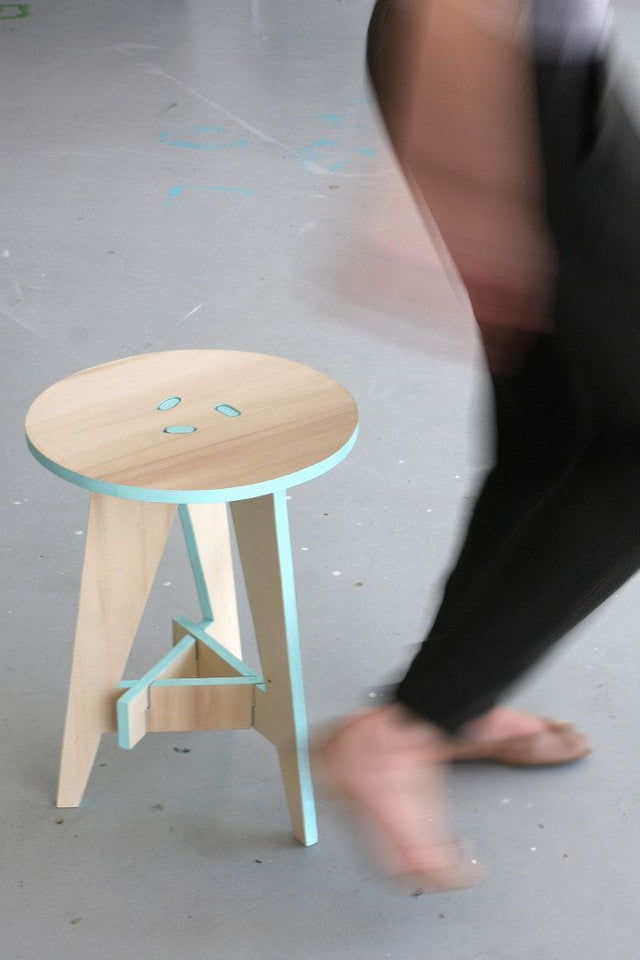
The pine plywood maintains the clear luminosity of solid pine: light cream tones, soft honey, with visible grain on the outer veneer.
The surface is typically more uniform than solid pine, less irregular, because the visible face is selected as a high-quality veneer. This allows for cleaner finishes and decorative materials that showcase the clear grain without distractions.
The edges can be left exposed or finished with veneers or solid pine edging to maintain visual continuity. Matte finishes, natural oil, or water-based varnish highlight the grain and soften the feel.

Endurance
Thanks to its layered construction (sheets or veneers) with alternately oriented fibers (one layer perpendicular to the next), plywood has high dimensional stability : it deforms less with changes in temperature and humidity than solid wood of the same thickness.
Good mechanical resistance considering its weight: it supports moderate loads well, it performs well in furniture that needs rigidity and a flat surface (such as shelves, wardrobe fronts, etc.).
Not as impact-resistant as hardwoods or thick woods, but quite acceptable for common interior uses. The edges and joints are the most vulnerable; they require good hardware support and, if struck, can splinter if not properly finished.
Water/humidity resistance will depend on the type of adhesive used and any treatments applied (edge sealing, special varnishes). It is not ideal for unprotected outdoor use.

Sustainability
More efficient use of raw materials: by dividing logs into thin veneers, more wood is used; less waste compared to large solid woods.
Fast growth of pine species, local availability in many areas of Europe, which reduces the footprint due to transport.
When it is FSC/PEFC certified, and low-toxicity adhesives with lower formaldehyde emissions are used, it becomes an environmentally friendly option.
Its lightness also helps in transport, packaging and assembly: less energy used, smaller carbon footprint.
Recyclable and repairable: the parts can be disassembled, the boards sanded and their useful life extended.
What furniture or style does it apply to?
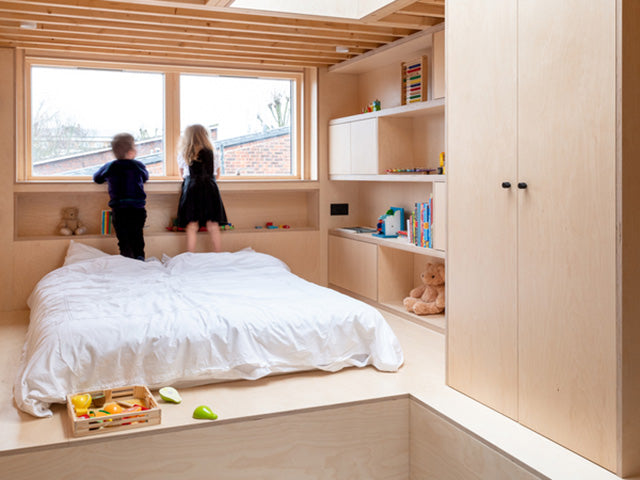
Modular furniture, wall and ceiling panels, flat wardrobe fronts, interior doors: spaces where continuous surfaces, clean lines, modern or minimalist style are sought.
Desks, side tables, light storage furniture: pine plywood is ideal if you want rigidity with less weight.
Nordic decor, Scandinavian style, slow design: bright, functional spaces, with an emphasis on the natural and the essential.
Children's or youth furniture: due to its clear aesthetic and warm feel, less aggressive use, accessible maintenance.
It is also used in DIY, light carpentry, temporary installations, stands, etc.
| Criterio | Pino macizo | Contrachapado de pino |
|---|---|---|
| Estética | Tono claro (crema a miel), veta natural con nudos visibles; aspecto orgánico y cálido. | Superficie homogénea; conserva el aspecto del pino pero con lectura visual más uniforme. |
| Veta y nudos | Nudos auténticos que aportan carácter; cada tabla es única. | Veta del enchapado; menos nudo marcado en la cara vista. |
| Estructura interna | Madera en una sola pieza o laminada en cantos. | Capas cruzadas (láminas) encoladas → alta estabilidad. |
| Resistencia a deformación | Moderada; sensible a cambios de humedad si no se estabiliza. | Alta; minimiza alabeos y torsiones. |
| Resistencia al impacto | Blanda; se marca antes pero se repara fácil (lija/aceite). | Buena para su espesor/peso; cara vista puede astillarse si se golpea en canto. |
| Peso | Ligero-medio. | Ligero; muy buena relación rigidez/peso. |
| Trabajabilidad | Muy fácil de mecanizar, atornillar y reparar. | Corte limpio con sierra adecuada; admite tornillería y herrajes técnicos. |
| Bordes y cantos | Canto macizo noble; radios suaves agradables al tacto. | Necesita canto visto (bonito si se deja) o canto chapado para acabado continuo. |
| Acabados | Aceite/cera/barniz al agua resaltan veta y nudos. | Acepta lacas y aceites; cuidado con lijado para no pasar la chapa. |
| Sostenibilidad | Recurso cercano y de crecimiento rápido; priorizar FSC/PEFC. | Aprovecha mejor el tronco (menos desperdicio); también con FSC/PEFC. |
| Usos recomendados | Cabeceros, mesas auxiliares, estanterías ligeras, muebles infantiles. | Módulos, estanterías, escritorios, panelados y frentes planos. |
| Dónde evitar | Zonas de alto impacto sin protección; exterior sin tratamiento. | Cantos sin rematar en alto roce; ambientes muy húmedos sin sellar. |
| Perforaciones / tornillería | Agarre directo muy bueno. | Excelente agarre en capas; ideal para herrajes ocultos. |
| Estabilidad dimensional | Depende del secado y del ancho de pieza. | Muy estable en grandes superficies. |
| Formatos habituales | Tablas, listones, tablero alistonado. | Tableros 2440×1220 mm (y similares) en varios espesores. |
| Precio percibido | Asequible. | Asequible; gran valor por su estabilidad. |
| Mantenimiento | Repaso fácil: lija fina + aceite/barniz al agua. | Mantenimiento sencillo; cuidar aristas y cantos. |
| Resumen | Esencial, natural y cálido para espacios nórdicos y slow. | Versátil, estable y ligero para diseño limpio y modular. |
Consejo: para frentes grandes y estables, usa contrachapado de pino; para piezas con tacto noble y canto macizo, elige pino macizo.